Browse Registry Lookup Archives for 3533803421, 3476347052, 3483402819, 3510476403, 3282513825

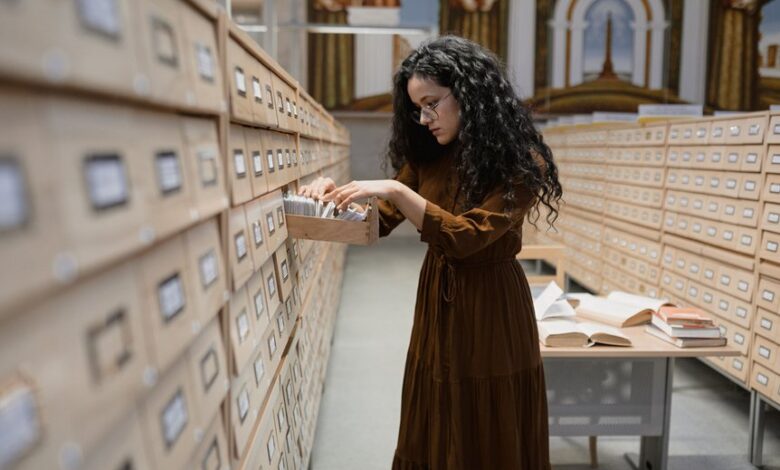
Registry lookups for the numbers 3533803421, 3476347052, 3483402819, 3510476403, and 3282513825 require careful cataloging of entries, timestamps, and transfer chains. The process is methodical: locate exact records, note ownership changes, and track any network links that inform provenance. Gaps or mismatches demand cautious interpretation and cross-checking with related archives. The outcome hinges on transparent documentation, yet unresolved questions linger, inviting further verification and cross-reference to complete the provenance.
What Registry Lookups Reveal About Ownership Histories
Registry lookups serve as a chronological record of ownership transitions, documenting the sequence of transfers, holdership changes, and status updates tied to a given asset.
The analysis presents ownership histories with precise sequencing, highlighting documented changes and persistent ties.
It notes network associations influencing provenance, while remaining detached.


Clarity prioritizes verifiable entries over interpretation, ensuring concise, archival insight into asset lineage and context.
How to Read a Registry Entry for a Given Number
To read a registry entry for a given number, one begins by locating the entry within the designated registry index and confirming the exact numerical identifier. The entry is then parsed for metadata, labels, and timestamps, establishing provenance. Observed facets include ownership histories and network associations, while cross-references illuminate related records. Documentation remains factual, controlled, and concise to preserve archival integrity.
Practical Steps to Verify Network Associations and Traces
Network associations and traces can be verified by systematically aligning registry entries with observed network artifacts. The procedure emphasizes reproducible steps and documented status checks, ensuring verifiable provenance. Ownership histories are tracked to confirm chain integrity, while registry interpretation clarifies metadata contexts. Results are logged, cross-validated, and archived for future audits, maintaining disciplined, freedom-respecting transparency rather than speculative inference.
Common Pitfalls and How to Interpret Gaps in Data
Gaps in data frequently arise from incomplete collection, unrecorded events, or mismatches between observed artifacts and registry entries. The analysis emphasizes cautious interpretation, documenting provenance, and distinguishing absence from inaction. Common pitfalls include overgeneralization, assuming continuity, and neglecting context. Ownership timelines and data reliability are central considerations, guiding methodological restraint and transparent reporting to support informed, autonomous inquiry.
Conclusion
In summary, registry lookups for the specified identifiers yield structured provenance: discrete metadata, timestamps, and ownership transitions traceable through documented hops. Each entry should be cross-validated against related records to confirm transfers and network associations. Gaps are acknowledged, not conjectured, guiding cautious interpretation. The discipline demands reproducible documentation and transparent reporting, where even absent data is noted as a boundary, like a sentinel marker that steadies the archival voyage through uncertain shoals.